A Necessary Path for the Financial World: Making the Blue Economy a Commonplace Economy (Part 2)
Interview


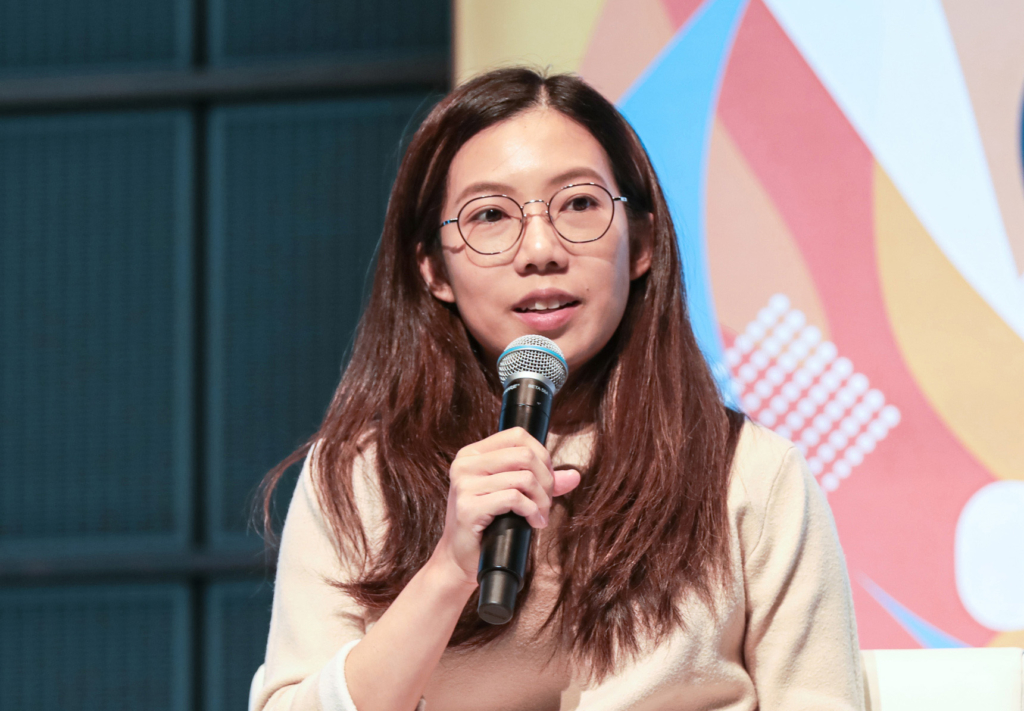
Hong Kong Sustainable Seafood Coalition (HKSSC)
Secretariat Mandy Wong
Hong Kong is one of the world’s leading hubs of the seafood trade, and is also known as a city with an unrivaled love of seafood. However, public awareness of seafood sustainability remains far from high, while abundant seafood dishes color the daily table. Also, challenges common across Asia, such as IUU (illegal, unreported, and unregulated) fishing and traceability, lie ahead.
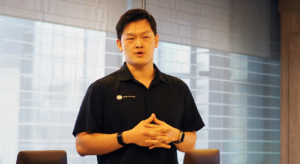
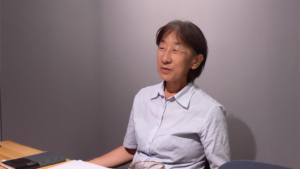
The Hong Kong Sustainable Seafood Coalition (HKSSC) is the industry platform to tackle these challenges. HKSSC’s Secretariat, Mandy Wong, who supports dialogue among industry members and is herself an avid lover of seafood cuisine, spoke with Seafood Legacy Times about the Coalition’s efforts to promote sustainable seafood.
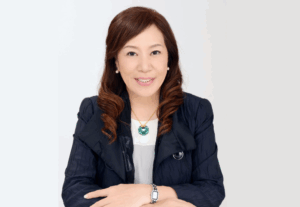
Mandy Wong
As the secretariat of the Hong Kong Sustainable Seafood Coalition (HKSSC), an industry-led platform dedicated to providing possible solutions to challenges facing the seafood industry, Mandy Wong supports corporate members in responsible sourcing and leads events such as the Sustainable SEAFood Festival. She studied marine and freshwater biology at the University of Glasgow from 2012 to 2016, and earned a master’s degree in environmental management from the University of Hong Kong in 2021. She has held her current position since 2022. She also runs “Choose Right Today,” the ADM Capital Foundation’s initiative to promote seafood sustainability among the general public. She works to mainstream sustainable seafood in the regional market by spreading awareness of seafood sustainability among businesses and consumers.
――Now that the month-long SEAFood Festival has wrapped up, how are you feeling?
What a relief. After months of preparation, industry members from across the seafood sector came together. I think everyone could feel just how hard each person is working to promote sustainable seafood, and support one another. Above all, it was inspiring to realize just how many people share this commitment to seafood sustainability.
――About how many participants did the festival have?
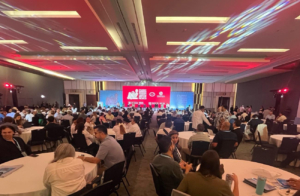
The festival consists of two parts: an online promotion for consumers (B2C), and a business forum for the industry (B2B). Nearly 50 companies from Hong Kong, Macau, and Singapore joined the online promotion, offering and promoting sustainable seafood dishes at various restaurants and hotels throughout the month of June. Then, more than 100 industry members joined the business forum held on June 30, wrapping up the month.
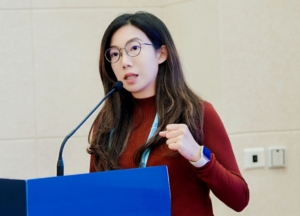
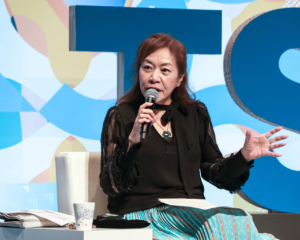
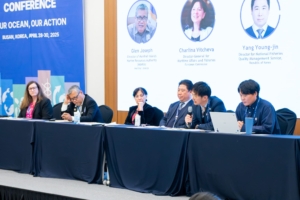
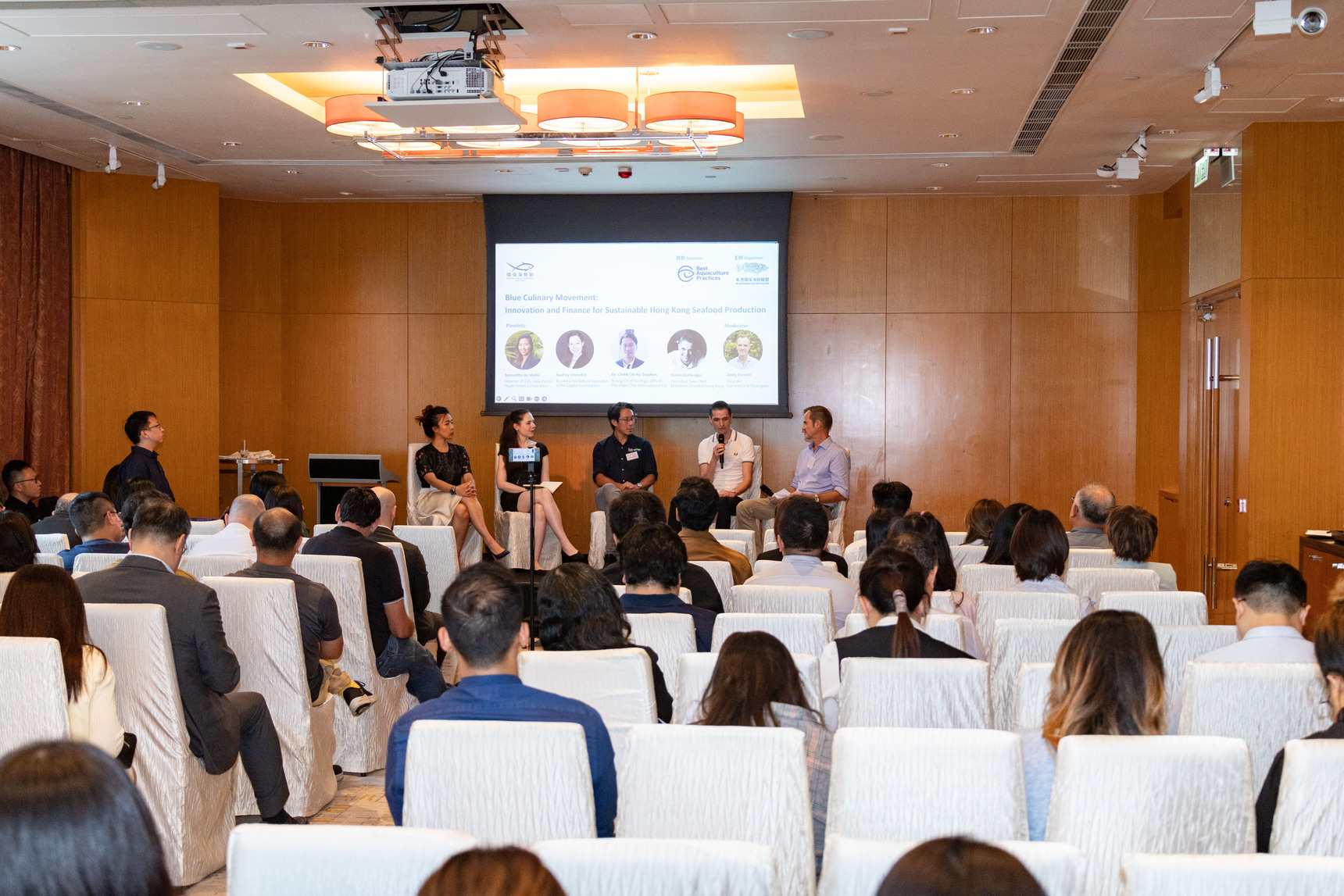 A panel discussion takes place at the business forum of the SEAFood Festival 2026 in Hong Kong, June 2026.
――It’s a big event once a year, isn’t it? When and how did it start?
It originally started in 2022, from a discussion among HKSSC corporate members. There was a shared consensus that we needed to raise awareness of seafood sustainability, and that’s how the idea for the festival came about.
It started in Hong Kong and has expanded in scale year by year, with Singapore joining as a participating city three years ago. Participation in the online promotion is free of charge, and we welcome any company that shares the same values.
――Could companies from Japan also join, if they apply, then?
Yes, they’re always welcome. Over the past five years, participation from companies in Hong Kong and Macau has grown, and gradually spread to Singapore as well. It would be wonderful if companies from Japan, Taiwan, and Korea also came to join this festival.
――I understand that you focused on BAP (Best Aquaculture Practices) certification this year.
BAP certification is run by Global Seafood Alliance who sponsored this year’s festival. We view seafood with various certifications — MSC, ASC, BAP, and others — equally. Since we had a special partnership with BAP certification this year, we decided to spotlight BAP-certified seafood at the festival.
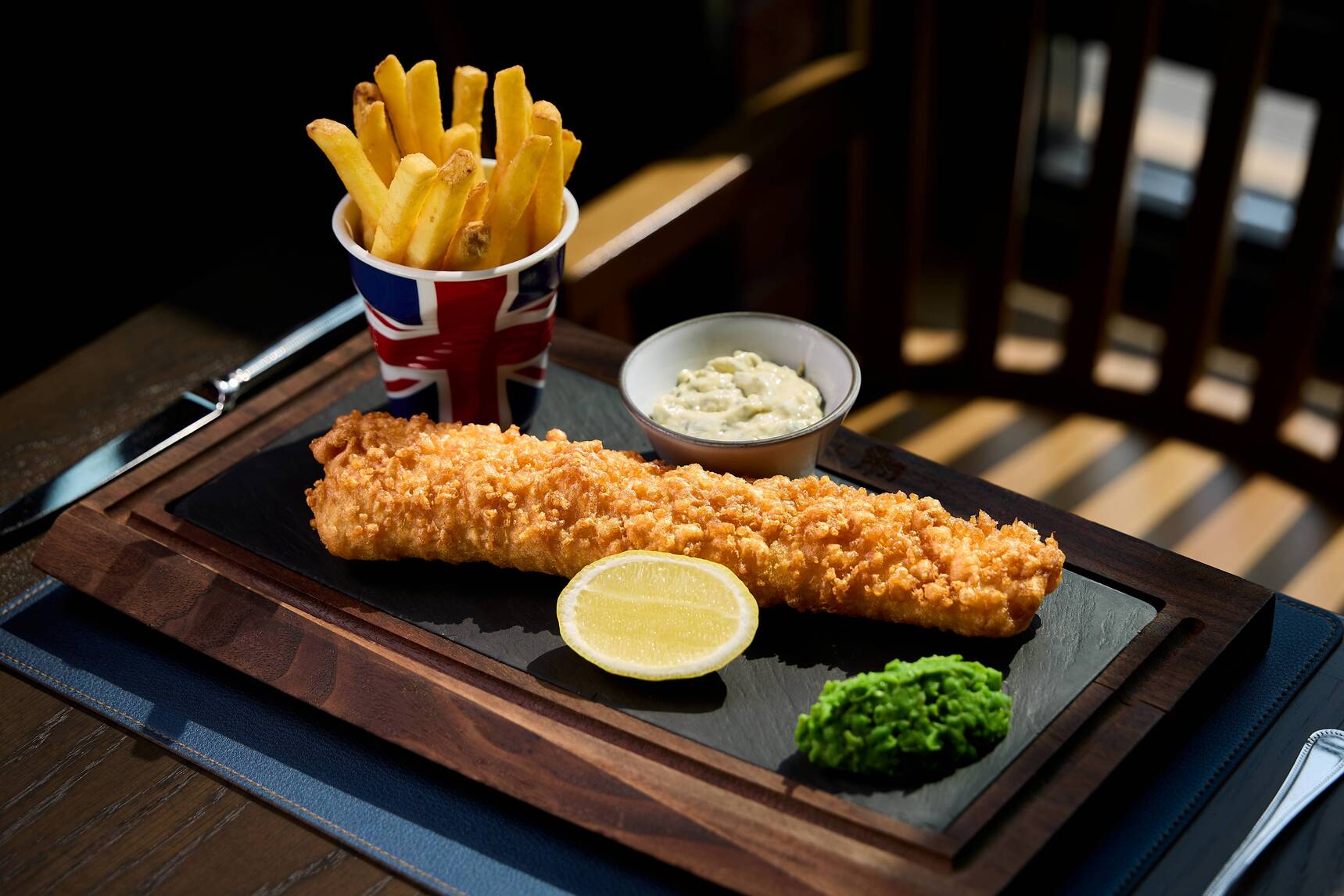 Fish and Chips, Ale battered line caught cod fish, triple cooked fries, mushy peas, tartar sauce (MSC certified) Photo: Gordon Ramsay Pub & Grill, Londoner Macao
――You used a lot of food photos in the online promotion, didn’t you?
Appealing food photos that whet customers’ appetites are the key to this festival. As a foodie, I have great respect for the chefs’ creativity and innovation. This festival became a reality thanks to the chefs who created these delicious dishes.
――Were there any dishes that left an impression on you?
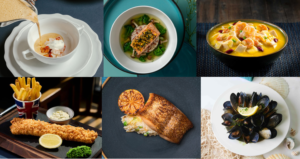
Sustainable seafood cuisine is showing growing diversity. When the festival first started in 2022, most of the dishes were Western-style, such as pan-fried cod or salmon fillets, but now we’re seeing much more Asian cuisine too.
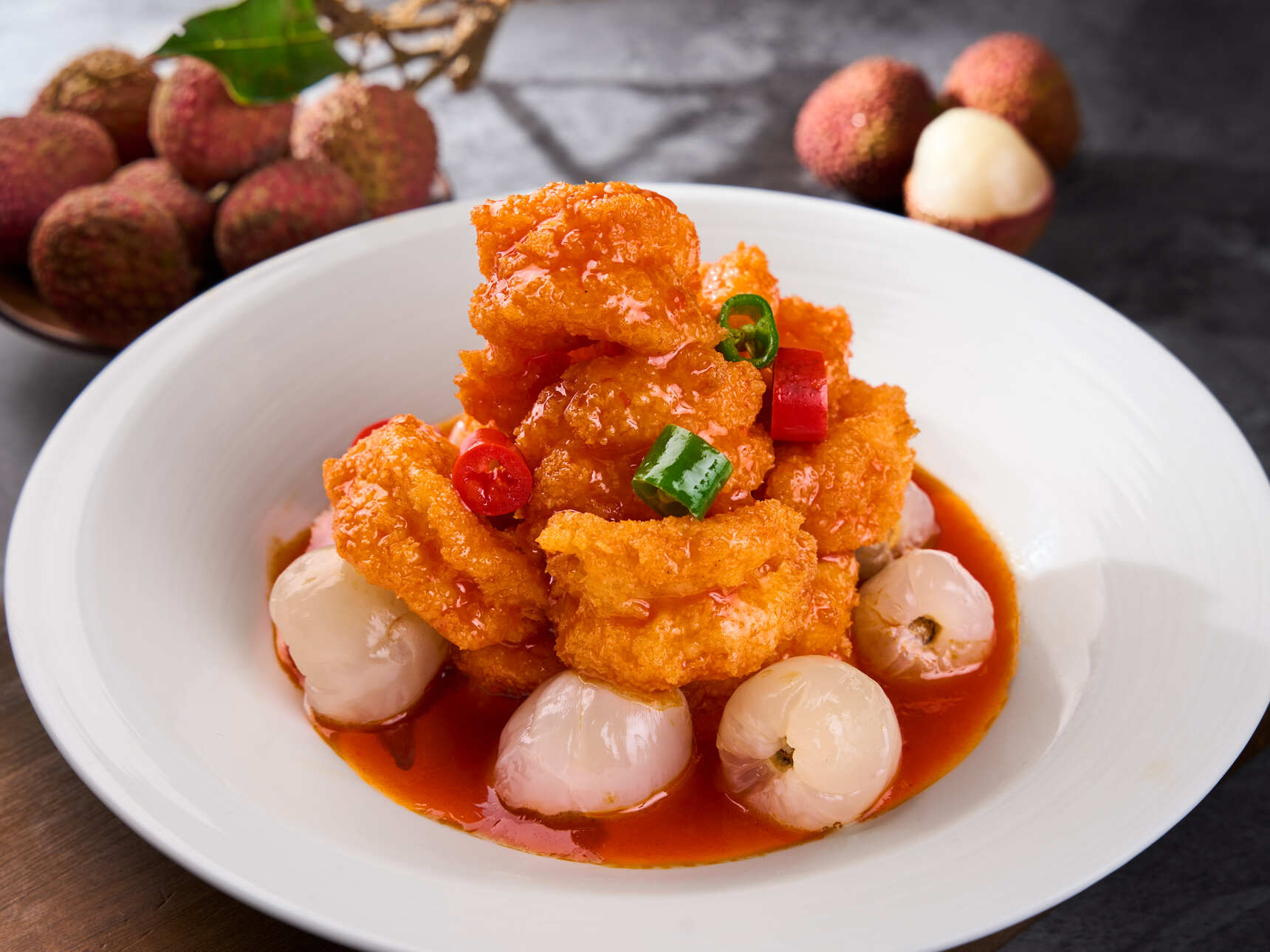 Deep-fried prawn with lychee in vinegar chili sauce (BAP certified)
There’s a variety of styles, like Cantonese-style prawn dishes, and Japanese cuisine as well — for example, cod in soy sauce. There were also dishes made with seafood certified by MEL, a certification scheme that originated in Japan. A creative dish using shimaaji (striped jack) was seasoned with mozuku seaweed and pickled plum. There was also madai (red seabream) usuzukuri with citrus-based dipping sauce, and lobster popcorn tempura.
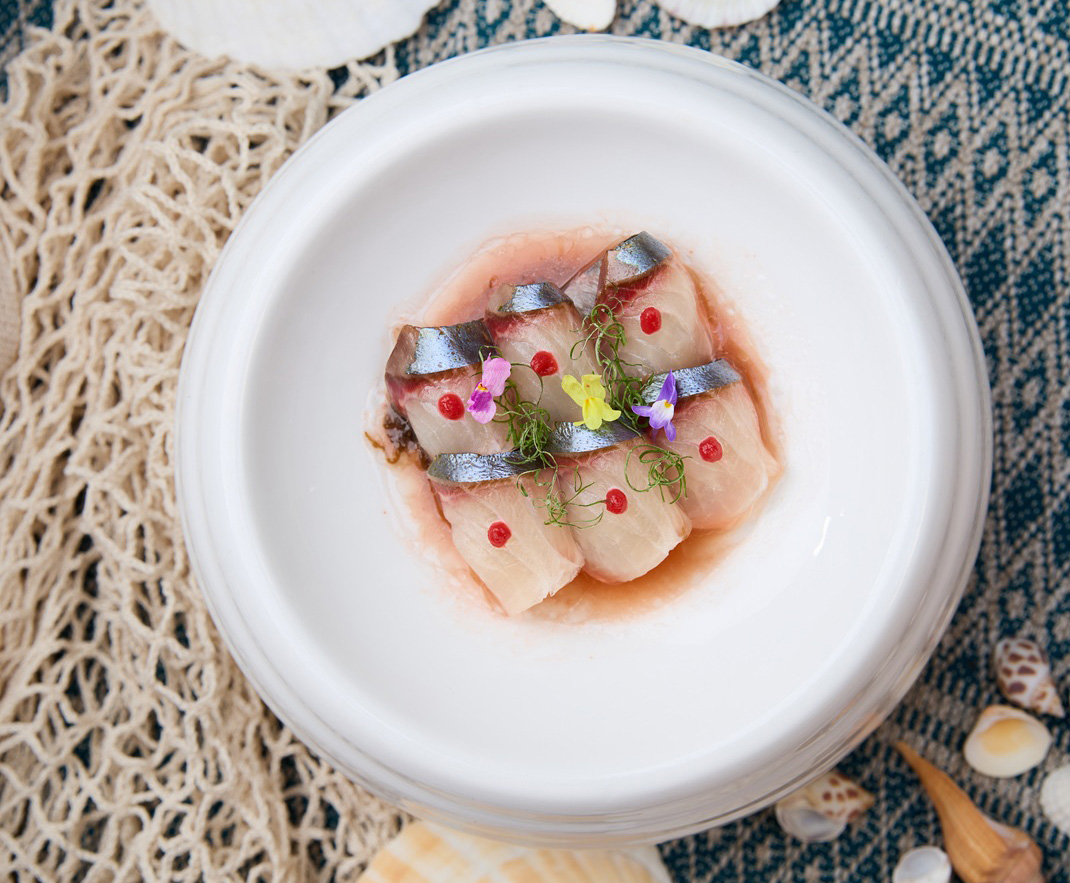 Shima-Aji (striped-jack) with mozuku seaweed, umeboshi pickled plum (MEL certified)
――Does that mean sustainable seafood is gaining more recognition among restaurant and hotel chefs, and that they’re more motivated to use it in a variety of dishes?
That’s part of it, but from another angle, I feel that recognition of sustainable seafood is growing among companies. To meet their sustainability goal of “responsible procurement,” companies are sourcing sustainable seafood and trying to use it company-wide, including in their staff canteen. I think that’s one reason chefs are also positive about using sustainable seafood.
――Hong Kong is an international business city, and also a hub of the seafood trade. Born and raised in Hong Kong, what does seafood mean to you? Do you like seafood cuisine?
I love it. Whatever seafood appeared on the table, it always made me happy. With the “magic” of my mom and dad, the house chefs, it was always delicious. It’s also a precious memory with my family.
It’s not just us — our neighbors and friends are all seafood lovers too. Where you can get the best seafood, which restaurant serves it, what kind of seafood new to the wet market — these are always topics of conversation for us.
From shelled species like bivalves and abalone to scaled fish, there are fascinating variations of kinds and forms among seafood. I’m not sure it’s the best comparison, but compared to pork, chicken, and beef, I think seafood offers a lot more options.
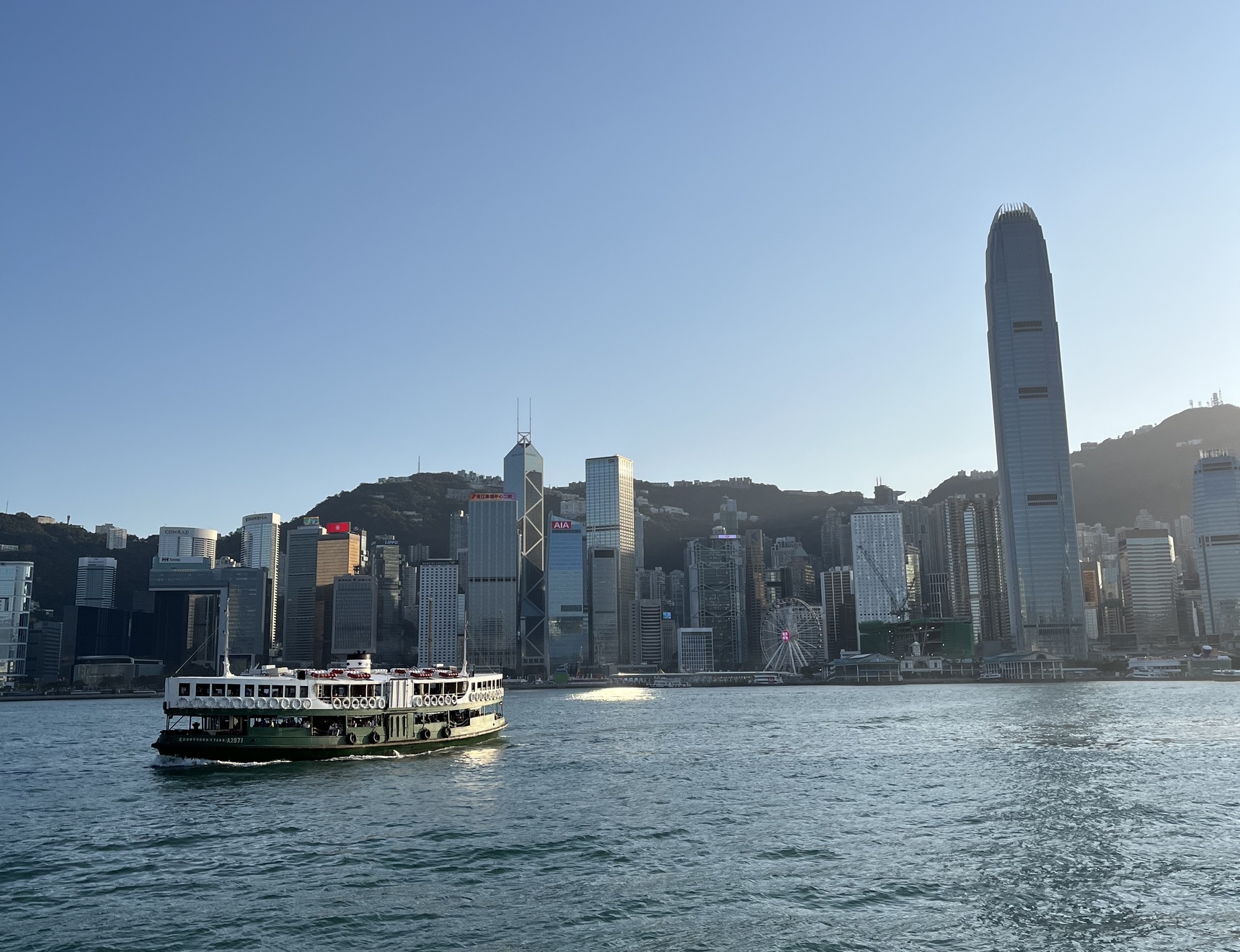 A view of Hong Kong, an international business hub. (Photo courtesy of Mandy Wong)
We live in the coastal area where fresh seafood comes in live from fishing boats. We often go to the wet market nearby. And when we wanted the freshest seafood, we would sometimes go all the way to Sai Kung(*) to shop for it.
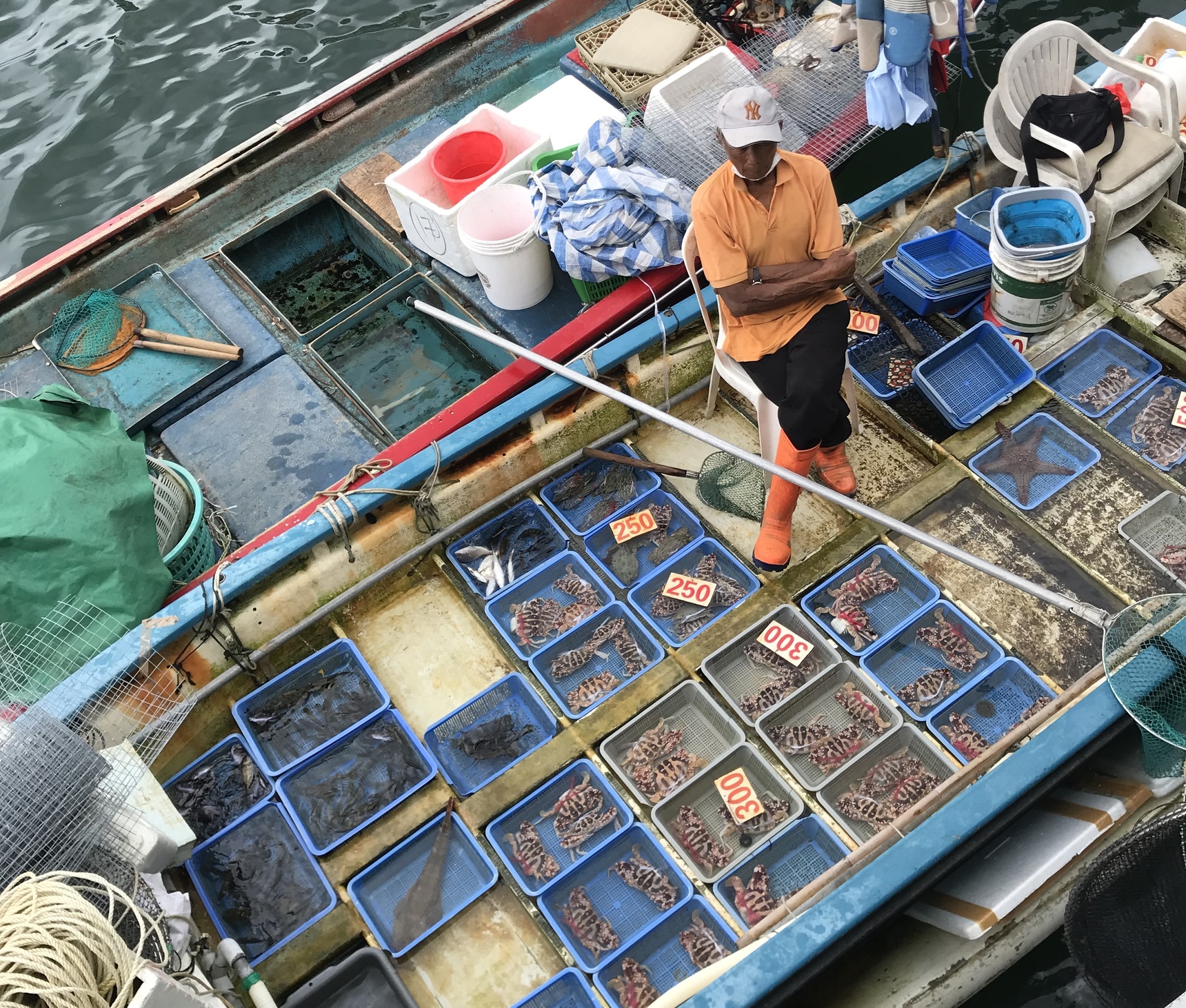 A floating seafood market in Sai Kung. (Photo courtesy of Mandy Wong)
――How do you cook it?
What’s typical among Hong Kong households is steaming. It’s a cooking method that preserves the flavor and texture well. We enjoy steamed fish, shrimp, scallops, abalone, and more, and pair them with different sauce. It’s simple and easy, and doesn’t take much time. And it’s really delicious.
Was it your love for seafood that led you to major in marine and freshwater biology at university?
That’s part of it too (laughs). When I was little, I used to watch all kinds of wildlife documentaries, like the programs on BBC. That’s where I fell in love with wildlife, from creatures on land to those in the ocean. When it comes to food, I became interested in how humans, the environment, and ecosystems are interlinked through food, and I wanted to learn about the sustainable use of resources, especially marine resources.
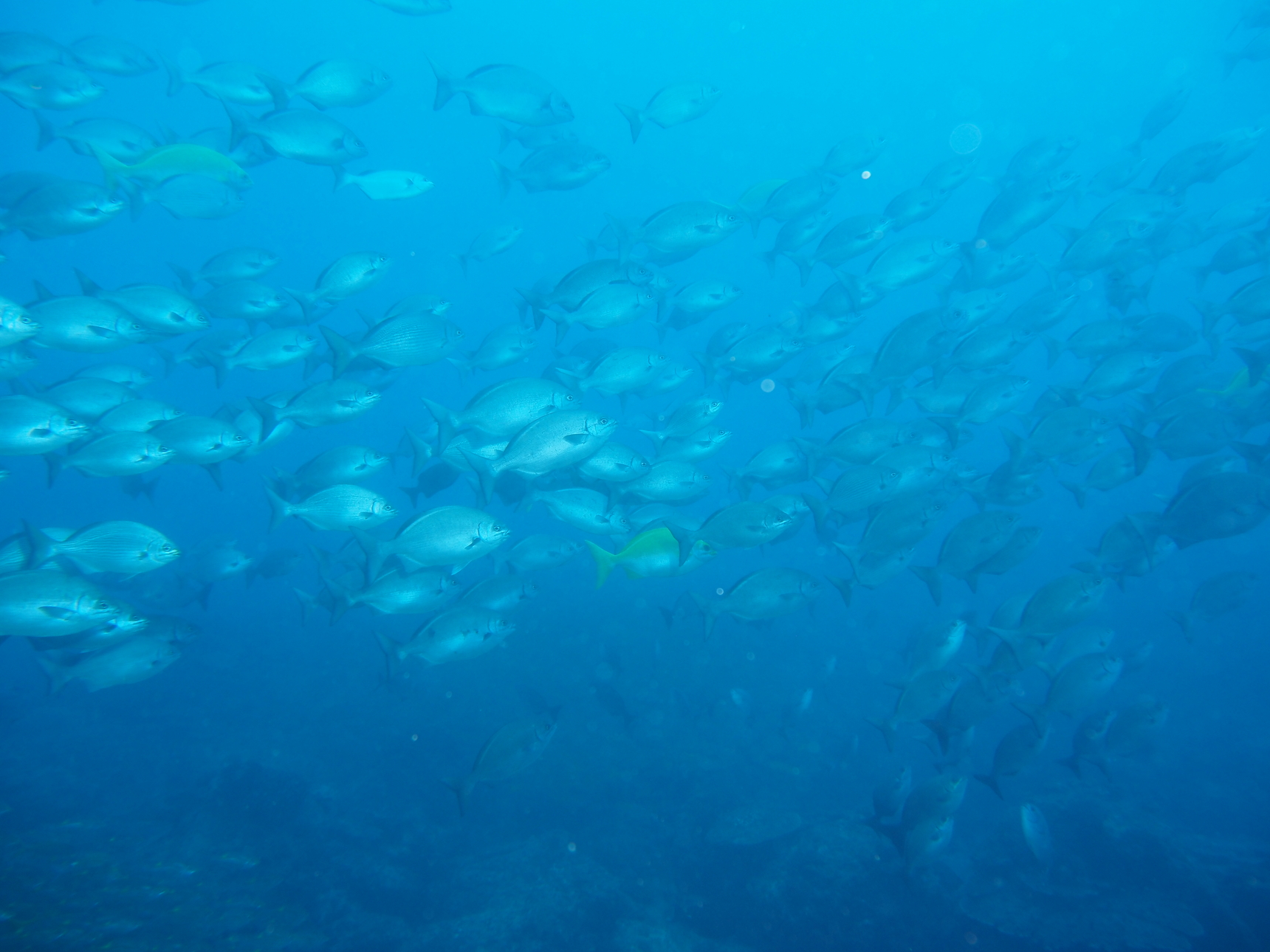 The beautiful ocean and marine life have captivated Mandy Wong since childhood.
――You decided to go to study alone at the University of Glasgow in the UK just after graduating from high school in Hong Kong — wasn’t that a big decision?
Yes, it really was a big decision. It was driven by passion, and I couldn’t have done it without my family’s support. I chose the UK because… it is one of the countries with the best education in the world, and I think it was also my adventurous spirit that wanted to explore a different world.
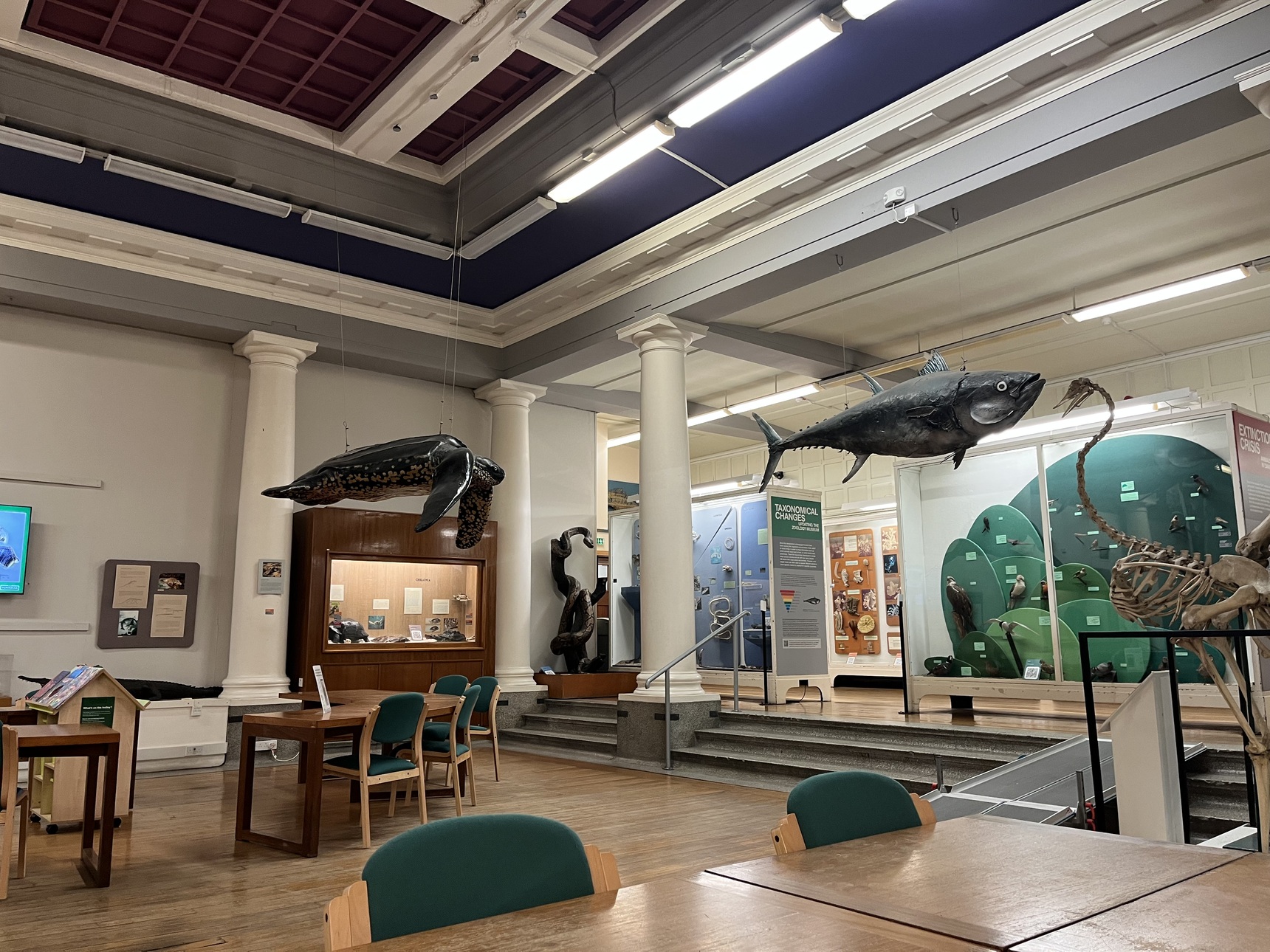 Mandy Wong studies marine and freshwater biology at the University of Glasgow.
――How was your four-year study in the UK?
It was one of the best times of my life. I traveled around Europe and encountered wildlife and different cultures in various countries. I enjoyed visiting fishmongers or wet markets in the UK, Spain, France and more. This habit still continues, even after returning to Hong Kong.
――What was the idea behind your decision to pursue a master’s in environmental management at the University of Hong Kong, after graduating from Glasgow?
My undergraduate degree gave me a solid ecological science foundation and I wanted to learn how to apply it practically. I chose to study environmental management to bridge the gap between theory and real-world application, equipping myself with policy understanding and skills needed to communicate science into industry practices.
The reason why I came back to Hong Kong was because it’s a global hub of the seafood trade and a city of seafood lovers. I felt people needed to know more about the sustainable use of marine resources, and I wanted to contribute to that, so I decided to work in Hong Kong.
――So your idea naturally led you into a practical world of working with the industry, rather than academic studies, right? Was HKSSC already established by the time you finished your master’s?
Yes, HKSSC was already established by the time I was doing my master’s. It was formed in 2018 by a group of passionate industry members and experts. They held the Sustainable Seafood Symposium to identify challenges and discuss possible solutions in the Asia region, and formed an industry-led coalition as one of the solutions to pressing issues like IUU fishing and traceability.
――How did you get involved with HKSSC?
After finishing my master’s, I got involved in running “Choose Right Today,” a project under the ADM Capital Foundation’s marine initiative — dedicated to raising awareness of overfishing and seafood sustainability among consumers. The ADM Capital Foundation is also a seed funding member of HKSSC, and through that connection, I joined as secretariat, supporting dialogue among industry members.
――Could you give us a bit more detail about your role as HKSSC’s secretariat?
I’m the only full-time member of the secretariat, and there’s one more person, a part-time technical advisor.
My role is very diverse. From facilitating meetings and communicating with members, and hosting industry events like the SEAFood Festival, to providing hands-on, practical support to members on responsible seafood procurement, such as advice and recommendations, I’m involved in a wide range of work.
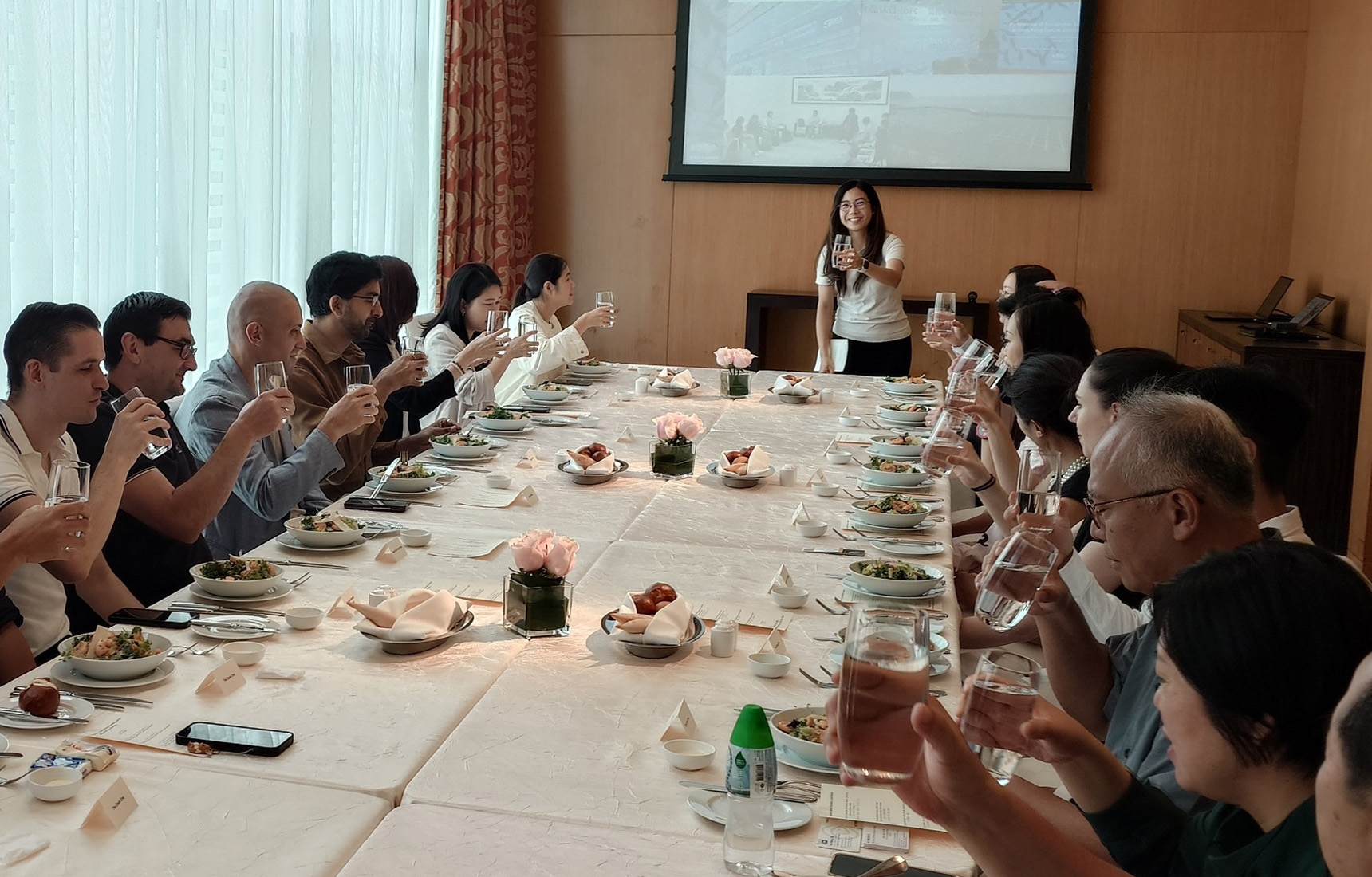 Mandy Wong facilitates a business meeting with member companies of the Hong Kong Sustainable Seafood Coalition (HKSSC). (Photo courtesy of Mandy Wong)
――What are the challenges facing you as secretariat?
When it comes to the festival, it’s not easy to work with companies in different situations. The timing might not be right for adding sustainable seafood to their menu, or they might need time to discuss with their management. And when the management changes, we occasionally end up starting the discussion all over again from scratch.
Some businesses we reach out to only know a little about sustainable seafood, so building that understanding naturally takes time. If they are not ready to join the festival this year, we treat our conversation as planting the seed to pave the ways for them to participate in future years.
In Part 2, Mandy Wong talks about the progress of the sustainable seafood movement in Japan through her eyes. She also shares her strategy for mainstreaming sustainable seafood, and her thoughts on the collaboration among Asian countries needed to make that happen.
Click here for program details and registration for the Sustainable Seafood Summit featuring Mandy Wong, Secretariat of HKSSC.
October 21, 13:20–14:40: “Unlocking Global Impact from East Asia Through Market Drivers” How can the East Asian market serve as a lever for global change? This session will discuss mechanisms to directly link responsible purchasing in East Asia to solving environmental and social issues at production sites.

Interview and text by Chiho Iuchi
Chiho Iuchi is a writer covering primarily science, technology, and culture in both Japanese and English. After working at the Japan Finance Corporation for Small and Medium Enterprise (now the Japan Finance Corporation) and the English-language newspaper The Japan Times, she became a freelancer in 2016. In 2024, she completed a master’s program in sustainability studies at the Graduate School of Public Policy, Hosei University. She serves as a board member of the Japanese Association of Science & Technology Journalists.
share



























Key terms and concepts to understand seafood sustainability.