
A Necessary Path for the Financial World: Making the Blue Economy a Commonplace Economy (Part 2)
Interview



Japan remains one of the world’s most discerning seafood markets, a reputation that depends on credible traceability—the capacity to follow fish from point of catch to point of sale, alongside evidence that products were legally sourced and responsibly produced. In practice, traceability entails catch documentation (e.g., vessel ID, fishing area, transshipment, volume) with social information (e.g., crew identity and age, contracts, hours and voyage length, safety training, grievance access). When designed and implemented well, such systems deter illegal, unreported, and unregulated (IUU) fishing and surface hidden labour risks—improving resilience and brand credibility in an industry with well-documented social responsibility challenges.
In tuna especially, Japan’s demand intersects with regional value chains whose labour conditions and documentation capabilities vary widely. DIWA’s work in seafood, particularly in Taiwan, Thailand, Indonesia, and the Philippines, indicates that labor rights in the supply chain, both on vessels and in processing facilities, remain a critical gap for many businesses, impacting reputational integrity and business resilience. Human rights risks, including forced labor, child labor, wage and working hours, violations, and health and safety concerns, require systematic risk-management alongside ecological sustainability and concerns related to IUU fishing.
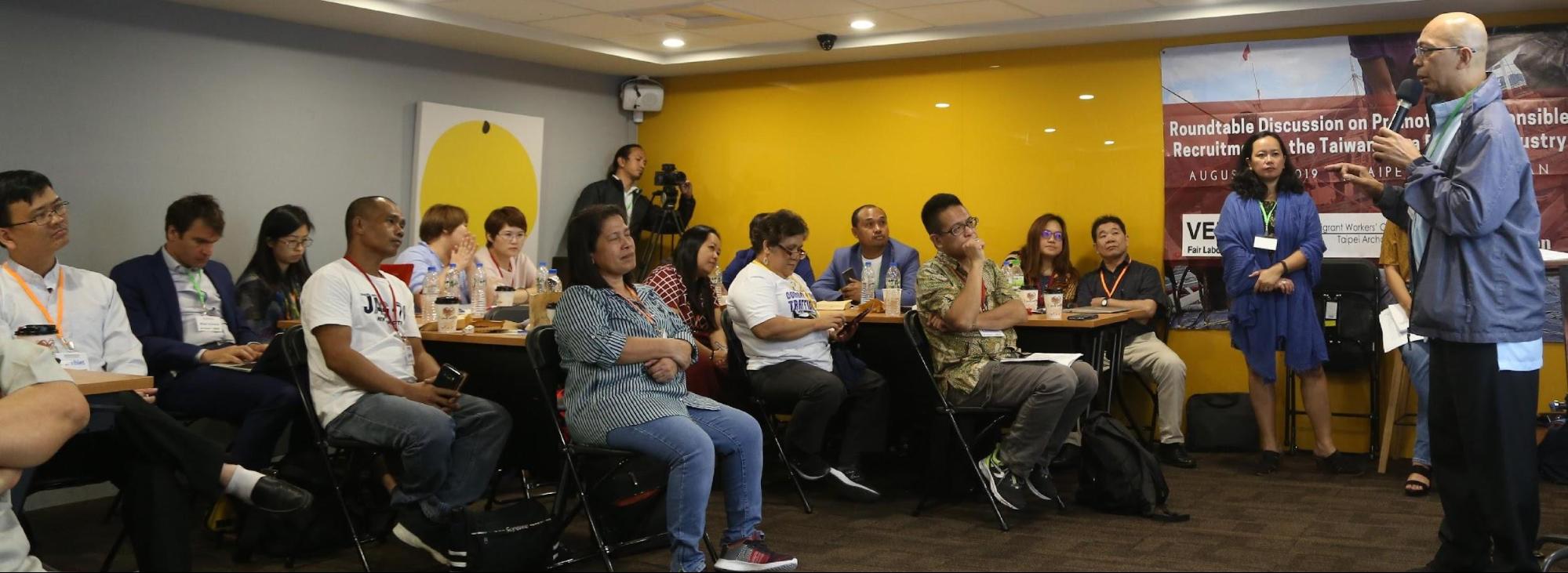 Roundtable Discussion on Responsible Recruitment in the Taiwan Tuna Industry in 2019 (Photo: DIWA)
Over the past decade, Thailand, Taiwan, and the Philippines have each faced forms of trade and market sanctions tied to IUU fishing, sustainability failures, and human‑rights risks. In Thailand, exposés of forced labor at sea triggered global scrutiny, culminating in the European Commission’s 2015 issuance of a “Yellow Card” for insufficient action against IUU fishing—placing EU market access at risk and pushing the government and industry to adopt aggressive reforms. This period also overlapped with Thailand receiving the lowest ranking in the U.S. Trafficking in Persons Report, further affecting buyer confidence and long‑term business resilience.
In Taiwan, the issue of the rights of migrant fishers, particularly those in distant water fishing working on longline tuna fleets, has attracted international scrutiny including several Withhold Release Orders (WRO) by U.S. Customs and Border Protection (CBP) acting on regulation regarding products made by forced labor, and inclusion since 2020 of Taiwan fish on the U.S. List of Goods Produced by Forced Labor.
In the Philippines, declining tuna stocks in General Santos City in Southern Philippines, which supplies major markets including Japan, alongside enforcement gaps, and persistent labor risks have likewise resulted in international attention, resulting in an EU “Yellow Card” in 2014. Strong risk indicators of forced labour, child‑labour, and fragmented enforcement continue to create long‑term vulnerabilities for Philippine exporters seeking access to high‑standard import markets.
While the trade implications of these documented abuses in seafood have resulted in policy changes at the national level, there is a need for broader industry change to ensure rights are upheld and serious human rights violations are addressed, including modern slavery driven by the isolation of distant-water fishing, the practice of transshipment, and low visibility and weak due diligence in global and complex supply chains. This article describes approaches to traceability informed by human rights due diligence (HRDD), using regional examples drawn from more than 10 years of DIWA’s research and program interventions to tackle serious human rights issues in seafood.
Traceability in the seafood supply chain refers to the ability to track and follow a seafood product through all stages of sourcing, production, processing, and distribution, from its initial capture or farming origin to the point of sale or consumption. Traceability requires that essential information about a seafood product such as where and how it was caught or farmed, who handled it at each stage, and how it was processed, is systematically recorded, maintained, and accessible throughout the supply chain. Effective traceability systems enable stakeholders, including regulators, businesses, and consumers, to not only be informed about products’ origins, but also to better assess human rights and sustainability risks within complex, global seafood supply chain networks.
In practice, however, many seafood brands have visibility only over their tier-one suppliers and lack insight into upstream stages of production, including fishing vessels, farms, and processing facilities. Even sophisticated traceability system? may be more focused on tracking seafood origin and source, with limited awareness of working conditions in the supply chain or the forced labor risks inherent in the recruitment and hiring of migrant labor in the workforce. This limited awareness of key factors of production, critical social criteria, and the chain of custody creates significant blind spots in the value chain. Without an understanding of risks beyond direct suppliers, companies face heightened exposure to legal, regulatory, and reputational risks.
Today, there is growing pressure from consumers, civil society, and regulators for greater transparency regarding the origin of seafood products and the conditions under which they are produced. Without comprehensive traceability systems, companies are unable to credibly demonstrate transparency or substantiate claims related to responsible sourcing, sustainability, or respect for human rights. However, traceability alone is not sufficient to ensure accountability in seafood supply chains. While traceability provides visibility, it must be accompanied by effective human rights due diligence (HRDD),provides the framework and tools through which companies can identify, prevent, mitigate, and address human rights risks and impacts within their supply chains, to enable companies to act responsibly in line with the UN Guiding Principles on Business and Human Rights (UNGPs).
Identifying and assessing actual and potential human rights impacts across the supply chain is a core component of HRDD. Robust and comprehensive traceability systems incorporate social criteria, without which companies lack reliable information about where and under what conditions seafood is produced, and by whom. Robust traceability systems not only link seafood products to specific vessels, regions, and processing plants, but also provide some data about the workforce and their working and living conditions, allowing companies to better identify high-risk areas where abuses—such as forced labor, unsafe working conditions, or exploitation—are more likely to occur. Access to this granular and verifiable information is essential for conducting meaningful and effective human rights impact assessments, a key step in HRDD.

Between 2016-2018, the USAID Oceans and Fisheries Partnership was implemented to develop a catch documentation and traceability (CDT) system to collect data and improve analysis towards effective fisheries management in Southeast Asia. Dignity in Work for All, known then as Verite Southeast Asia, in partnership with the US-based organization Verité, supported the USAID Oceans project by designing a framework to integrate labor criteria in the CDT system.
The project, which illustrates that human rights, biodiversity and ecological sustainability are interlinked and must be addressed as such, has many lessons to offer Japanese stakeholders. The findings indicate that a keen understanding of seafood workers’ vulnerability to human rights risks, and the sources and drivers of these risks is critical to building systems that can adequately collect the right data, data that can be used to address some of the most serious human rights risks in the sector. The report provides Key Data Elements (KDEs) that should be incorporated into CDT systems to enable robust monitoring and adherence to human rights standards. It also cautions against over-reliance on data collection without proper analysis and a process in place to address clear human rights violations.
DIWA’s analysis of labor conditions of tuna fishers in General Santos City in the Philippines, the so-called “tuna capital” of the region, was important in developing recommendations for the CDT improvements. It indicated that typical CDTs are not designed with a human rights lens, leading to major blind spots and governance gaps. DIWA noted that systems are not built for collecting readily available KDE including worker identity and age, contract status, recruiter, wage and payment method, work hours and voyage length, safety training, and access to grievances. This was especially critical for operations relying on handline fishing, where many workers are employed under unregulated and informal hiring systems that placed them in precarious situations, with limited access to labor protections otherwise provided to regularly employed fishers. As fish stocks decline in the Philippine Exclusive Economic Zone, fishing vessels may go further and stay at sea for longer periods of time, often in Indonesian waters, exposing undocumented workers to threats of apprehension and detention. For workers who cannot choose the fishing ground, this practice, in tandem with other forced labor risk indicators – lack of transparency in payment systems, unauthorized pay deductions, forced and excessive work hours in isolated and remote fishing grounds– can amount to human trafficking for labor exploitation.
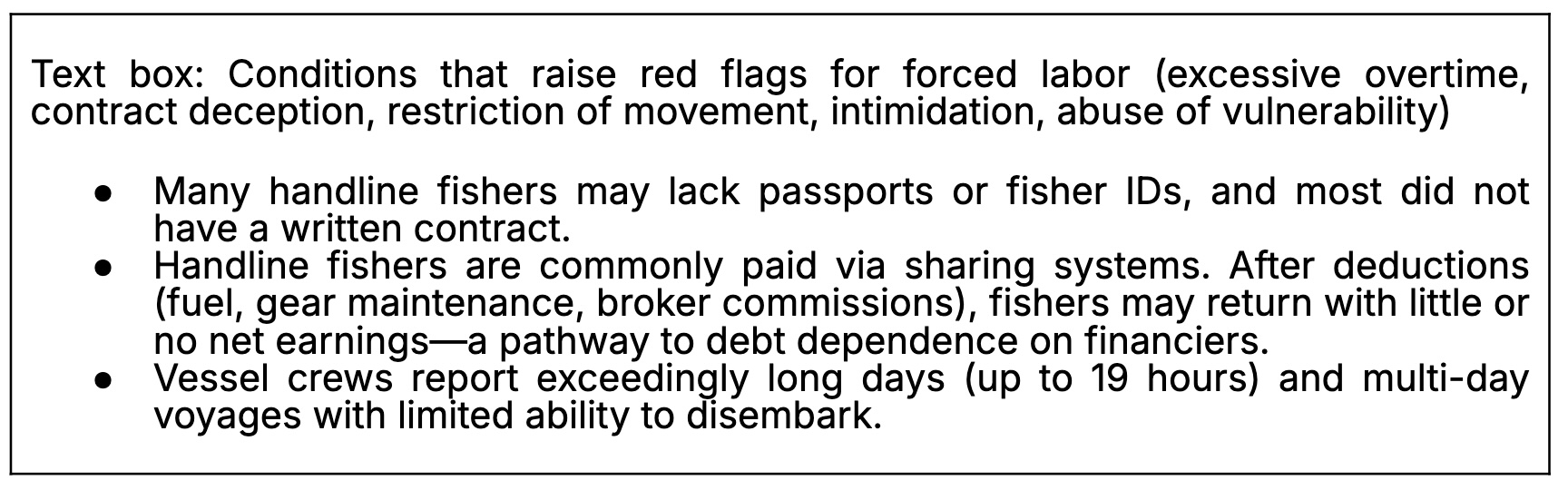
The USAID Oceans report recommended expanding government inspections to vessels (especially handline) and organizing multi-agency “port-in/port-out” checks to verify crew lists and contracts. It also suggested using the CDT technical infrastructure to improve connectivity/ WIFI at sea so workers can contact families, access confidential grievance channels, and give verifiable feedback that complements logbook data.
The project also looked into conditions in the processing facilities, pointing to the need for companies to ensure comprehensive risk assessment. While canneries in General Santos consistently meet general labor standards in official inspections, casualization through third-party agencies, short contracts, and piece-rate or quota pressures remain common. Women dominate these production lines and report repetitive work, excessive heat, and chemical exposure. The report pointed to the need for buyer’s traceability to likewise track and monitor the conditions of the workers processing the fish, by mapping the employment model (direct vs. agency) and worker protections (union presence, OSH training, access to remedy) available to them.
Text box: Key Data Elements recommended for CDT systems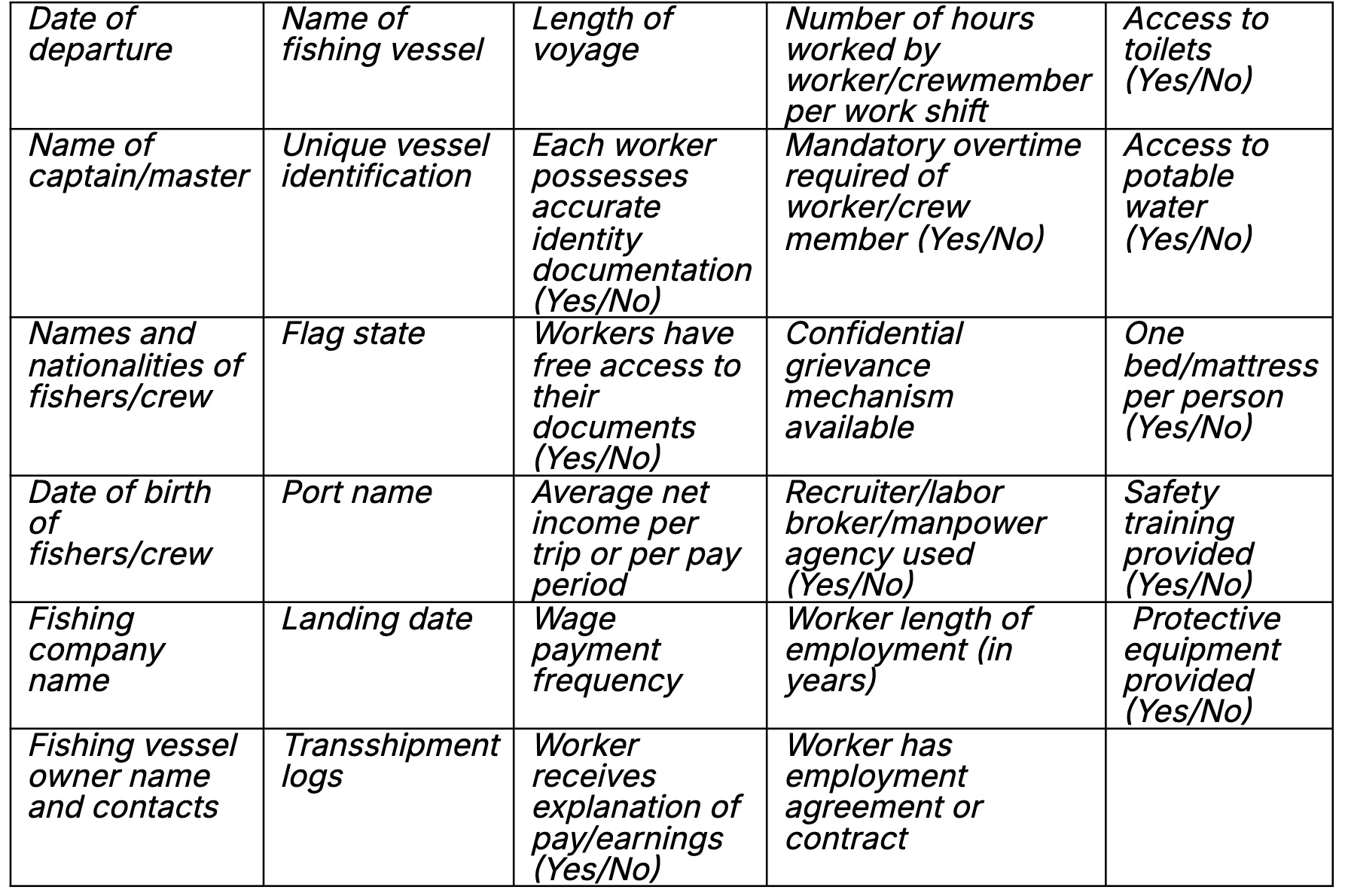
Recognizing the critical role of traceability in addressing human rights and sustainability risks, a growing number of traceability initiatives and technologies have emerged in recent years within the seafood sector. These initiatives aim to improve visibility, data integrity, and accountability across complex and often opaque supply chains, particularly in relation to labor conditions. Broadly, existing traceability and due diligence efforts can be grouped into two categories: initiatives implemented at vessel-level, which seek to address risks directly from fishing operations at sea, and at manufacturing and processing level, which focus on identifying key gaps in land-based operations. These approaches can complement each other to strengthen human rights-focused traceability and due diligence across seafood supply chains.
In many fishing vessels and manufacturing facilities that rely on migrant workers, one of the most significant human rights risks is debt bondage. To secure employment, many migrant workers pay high recruitment fees to brokers, sub-agents, and labor agencies, often incurring substantial debt before they begin work. This debt can trap workers in exploitative situations, as fear of losing income and the ability to repay recruitment-related loans limits their capacity to refuse excessive overtime, unsafe conditions, or other abusive practices. The risk is compounded by complex and opaque recruitment chains that span multiple intermediaries and jurisdictions, making it difficult for manufacturers and downstream buyers to detect or address abusive recruitment practices.
Without traceability that extends beyond factory operations to recruitment pathways, serious labor risks can remain hidden within otherwise compliant manufacturing facilities. At the vessel level, implementing effective traceability and controls remains doubly challenging due to the operational characteristics of fishing activities and the structure of the global fishing industry. Fishing vessels often operate far from shore for extended periods, sometimes across several countries or in international waters, limiting real-time oversight and regulatory enforcement. Connectivity constraints at sea further hinder the consistent collection and transmission of data related to catch, labor conditions, and crew welfare.
However, despite these challenges, a number of emerging initiatives and studies have begun to demonstrate pathways for improving working conditions on land- and vessel-based operations.
・On fishing vessels, particularly in Taiwan, a campaign to increase workers’ access to connectivity while at sea has been embraced by various stakeholders. These efforts recognize that addressing labor risks at sea often requires technological changes tailored to the realities of fishing activities. At the same time, WIFI on board must be embedded in operational and management changes, such that worker welfare and human rights issues can be addressed in practice.
・In 2021, DIWA, in partnership with Verité, conducted a study titled, Mechanization of Thai Purse Seiners which examined the business case for renovating Thai fishing vessels through increased mechanization. The study found that vessel upgrades, such as improved equipment and safer onboard systems, can significantly enhance working conditions for fishers by reducing physical strain, improving safety, and lowering exposure to hazardous tasks. Importantly, these improvements were also shown to generate productivity gains and operational efficiencies, illustrating that investments in better labor conditions at sea can deliver both social and economic benefits.
・Industry-led implementation of the Employer Pays Principle (EPP) in Thailand, which requires that workers pay zero recruitment fees and employers cover all costs, has emerged as a critical preventive and remedy measure to reduce workers’ vulnerability to debt bondage. Effective adoption of this principle requires that buyers and seafood suppliers understand recruitment processes, identify recruitment-related costs borne by workers, and take responsibility for preventing fees-charging to workers, remediating through repayment if violations are found. Frameworks such as DIWA’s Seven Elements for the Successful Implementation of the Employer Pays Model provide practical guidance for establishing systems to mitigate the risk of excessive recruitment fees and remediate any unjustified charges borne by workers
・Recruitment due diligence models, such as the ones developed by DIWA’s sibling organization, The Fair Hiring Initiative have been adopted by seafood industry associations, aiming to, among others, provide companies with the tools and training needed to improve recruitment transparency and visibility.


Salient issues persist in the sector, particularly debt bondage, a complex issue that is not easily detected or addressed. While traceability initiatives provide much needed visibility across the seafood value chain, these must be complemented by targeted HRDD initiatives that respond to the risks and issues that are surfaced in the data, a key recommendation in the USAID Oceans Report.
Human rights challenges in the seafood industry and their solutions highlight theF importance of rights-informed traceability and transparency initiatives. Traceability mechanisms, embedded within the context of HRDD and EPP, enable brands to better identify systemic constraints and design response strategies that address both risks and root causes.
Embedding these mechanisms and frameworks in the seafood industry requires multistakeholder efforts – involving workers’ organizations, regulators, business, and the recruitment sector – to effectively address complex human rights risks and issues. The Japanese seafood market, which sources and distributes raw materials globally, has an important role to play and stands to gain from a global industry that embraces credible and rights-informed traceability mechanisms alongside initiatives aimed at addressing and responding to some of the most egregious and complex human rights issues impacting workers in the seafood sector.
Written by: Dignity in Work for All
DIWA(Dignity in Work for All)
Dignity in Work for All (DIWA), formerly Verite Southeast Asia (VSEA), is a non-profit, non-government, labor rights organization, established in the Philippines in 2005 and currently active in more than 20 countries. DIWA carries out groundbreaking research and social compliance audits and assessments. We partner with multinational brands, suppliers and other stakeholders to highlight risks, create transparency, build capacity, and improve working conditions and overall social performance within global supply chains. DIWA has been at the forefront of promoting ethical recruitment as a means of preventing forced labor in corporate supply chains.
www.dignityinwork.org
share











































































Key terms and concepts to understand seafood sustainability.