A Necessary Path for the Financial World: Making the Blue Economy a Commonplace Economy (Part 2)
Interview


Climate change is already having an impact on the global seafood business and starting to affect the seafood industry and the stability of its supply chains. For Japanese seafood companies, which depend on fish from many regions (both via wild-capture and aquaculture), this is becoming a serious financial and economic issue, not only an environmental one.
With this in mind, we invited François Monnier, Head of the Oceans Programme at the UK-based think tank NGO Planet Tracker, to contribute an article on the financial impacts of climate change on Japan’s seafood industry.
Planet Tracker’s report ‘Catch it like it’s hot: Climate change hits seafood finances and demands systemic adaptation’ explains why the seafood industry must urgently invest in climate adaptation measures. The team mapped out 83 different risks linked to the five main climate drivers in the ocean: warming, acidification, deoxygenation, sea level rise and extreme weather.
These risks are not distant threats, and they are affecting profitability in the seafood industry now. These physical changes in the ocean are becoming a major driver of economic and financial risk across the seafood value chain, and yet current risk management is not keeping up.
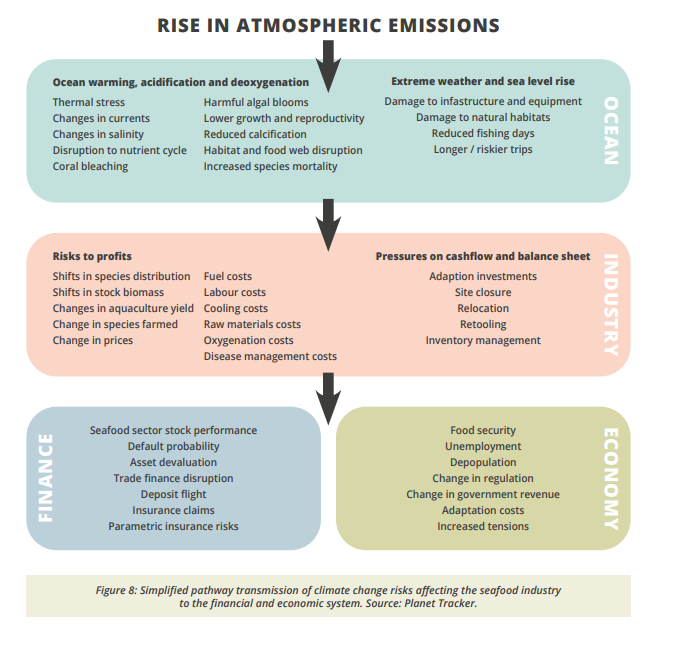
These drivers rarely act alone but often happen simultaneously and reinforce each other: one climate shock can have multiple linked repercussions and very quickly turn into multiple problems in the supply chain. For instance, ocean warming affects coral bleaching, species distribution, thermal stress and so on simultaneously, whilst these impacts further interact with one another. The figure below shows how risks linked to climate change in the ocean can trickle down and have much wider impacts on the seafood industry and larger financial and economic systems.
In this article, we discuss how the five main drivers already affect the seafood industry financially.
Since 1971, the ocean has absorbed more than 93% of the heat generated by anthropogenic global warming. This can drive fish to move towards cooler waters or deeper layers, reducing the availability of familiar species in traditional fishing grounds while at the same time changing reproductive patterns and decreasing fish size. Warming also alters ocean currents, drastically shifting temperatures of an area, the nutrients available and migratory patterns of valuable species.
When paired with high CO2 availability, the shifting of currents, changes to vertical mixing and increased ocean surface temperature disrupt the nutrient cycle to create an environment that is ideal for the formation of harmful algal blooms. These blooms can be harmful to other organisms since they deplete oxygen in the water column, and sometimes toxic.
Out of the 83 climate-driven risks, we found that 100% of risks associated with collateral value deterioration, credit risk and sectoral concentration were directly or indirectly affected by sea temperature increase.
In Japan, rising water temperatures in Hakodate have been thought to be the cause of poor catch volumes of the Japanese flying squid. This warming is shrinking the spawning areas of the squid, reducing reproduction and delaying spawning.
Warming waters have also reduced konbu (kelp) harvests and shifted the distribution of many key industrial species needed for wild catch fisheries such as Pacific saury, mackerel and salmon.
Deoxygenation is a byproduct of ocean warming, made worse by changes in ocean currents and circulation. Warmer water holds less dissolved oxygen, particularly in the surface layers. Between 1960 and 2010, oceanic oxygen reserves have decreased by 2%. This reduces habitat for aerobically respiring organisms, alters the cycling of vital nutrients and in extreme cases, leads to death. This also influences species’ ability to move to deeper depths globally, leaving them exposed to predation and preventing predators from hunting at depth, which may initially increase the catch of commercially viable species, but will likely decrease catch long term.
Oxygen levels were found to affect 88% of the risks associated with credit risk and 75% of the risks associated with catastrophe bond risks. It is likely that aquaculture farms are more sensitive to the immediate risks associated with deoxygenation.
For Japanese fishing companies, one example of impact is linked to how deoxygenation is affecting jumbo squid. As this species already inhabits oxygen minimum zones in the Eastern Pacific Ocean, a decrease in dissolved oxygen in the ocean is reducing their habitat. They are not very well poised for adaptation either. When considered with ocean acidification, preventing the squid from entering near surface waters, this habitat compression is hypothesised to alter the squid’s behaviour and feeding, effecting growth and reproduction, and consequently the ability to fish them.
Of the five major effects of climate change on oceans, acidification may have the most catastrophic impact on high-value shellfish fisheries, whilst also damaging coral reefs. Caused by atmospheric CO2 dissolving into seawater, ocean acidification reduces pH and carbonate ion availability. This chemical change fundamentally disrupts calcification processes essential for shell-forming organisms and coral reefs.
Planet Tracker found that 75% of the different credit risks that we identified in the seafood industry (for companies and financial institutions) are also affected by pH level.
In Japan, the subarctic coasts of Hokkaido Prefecture account for 60% of shellfish catch in Japan. Sea urchins and scallops are harvested here and are both vulnerable to and beginning to feel the effects of both acidification in the winter months and warming in the summer. A decrease in pH has already been observed, endangering a small snail species that is a nutrient source for many species such as salmon and cod. As these conditions are expected to worsen, it is only a matter of time before other valuable species are targeted.
This rise in sea levels is mainly due to thermal expansion of warming ocean water and accelerated melting of glaciers and ice sheets. By 2050, the IPCC projects global mean sea level will rise by 24 cm (17–32 cm likely range) under the lowest emissions scenario. This is threatening coastal communities and infrastructure worldwide, damaging coastal assets and eroding nursery habitats like mangroves and estuaries. Sea level rise increases the salinity of freshwater systems vital to inland and aquaculture production, which can be detrimental to brackish and freshwater species.
Planet Tracker found that 100% of funding liquidity risks found and 75% of catastrophe bond risks would be affected by sea level rise.
In Asia, it is thought that sea level rise will cause the salinity intrusion period to extend in the Mekong Delta. This rise is causing saline water to intrude deeper into the mainstream river increasing the water’s salinity to rise above the shrimp’s optimum for survival. 79,000 hectares of aquaculture (mainly brackish water shrimp farming) have already been impacted, equivalent to 5% of global shrimp aquaculture area and affecting Japanese companies that handle this key commodity.
Climate change is also causing more frequent and severe extreme weather events affecting the ocean. Between 1982 and 2016, marine heatwaves have doubled in frequency whilst also becoming longer lasting, more intense and extensive.
Planet Tracker found that of the 83 climate driven risks, 100% of the risks associated with operational risk and collateral value deterioration are affected by extreme weather.
In Japan, climate change is likely to increase the intensity and the frequency of typhoons and marine heatwaves. Already the northern waters off Hokkaido and the Pacific side of Honshu, (Tohoku) have seen a drastic increase in marine heatwaves, due to an extreme shift in the flow of the Kuroshio Extension, replacing fresh, cold subarctic waters with warmer subtropical ones.
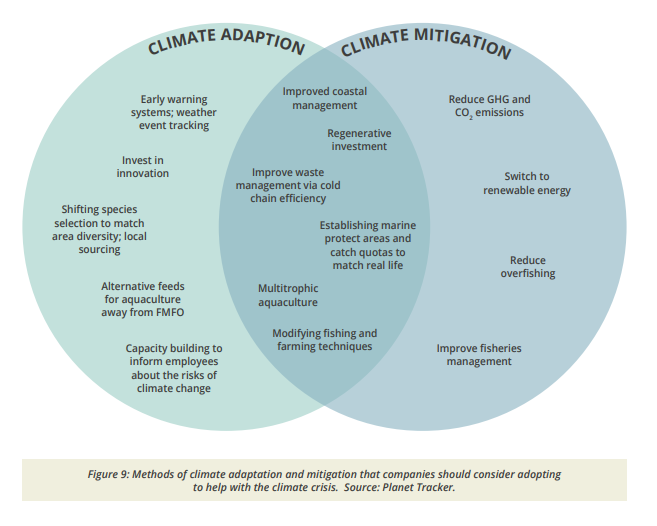
For all these reasons, the seafood industry faces an urgent need for comprehensive climate adaptation and mitigation strategies. Many companies have mitigation strategies, but adaptation investments remain minimal. Urgent climate mitigation and adaptation is necessary not only for the health of marine ecosystems, but also to protect investor capital and ensure the long-term viability of fishing and aquaculture companies within the industry.
Planet Tracker urges companies across the seafood value chain to step up their climate adaptation investments. Large, industrial companies are likely to have more resources and capabilities to do so on an absolute basis and need to lead and support small-scale operators.
Encouragingly, some companies are beginning to adopt adaptation strategies to lessen their financial risk linked to climate change. In Japan, Maruha Nichiro has been assessing the impact of climate change on Alaskan pollock in the Bering Sea and Japanese anchovies in Peru, analysing stock decline under different climate scenarios.
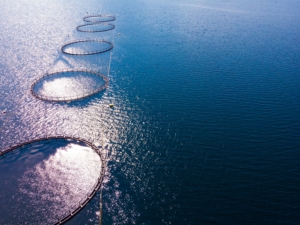
They have also begun the introduction and expansion of submersible aquaculture cages for their yellow tail and amberjack production, as a countermeasure to possibly reverse poor growth due to increased water temperature and have also started further diversifying their production organisms. The company has also entered into the production of cobia which is more resilient to high water temperatures.
However, these changes are not enough, and more work is necessary on both the mitigation and adaptation front. The figure below summarises key actions that need to be implemented.
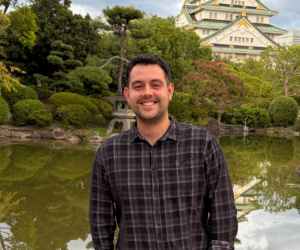
François Mosnier
Planet Tracker Head of Oceans team
François brings 15 years of experience working across finance, nature conservation and sustainable food production. At Planet Tracker, he is in charge of driving change at corporates dependent on or impacting the ocean, using finance as a lever. The ocean team’s research focuses on fishing, aquaculture and deep sea mining, demonstrates the financial materiality of ecosystem health to investors, and advises them on what changes they need to ask companies to protect future returns. Prior to joining Planet Tracker, François was a financial analyst at Exane BNP Paribas and Capital Group, and a conservation finance specialist at Conservation Capital.
share




































Key terms and concepts to understand seafood sustainability.